

We beat Liquid Glass
Or how we found out where Apple draws the line

About a month ago I delved into Apple’s new design language. Safe to say, I wasn’t a fan.
Named Liquid Glass, this aesthetic felt like pure dogmatism, design for the sake of design, with usability pushed as deep down as your dad’s mental health issues.
Don’t worry, there’s a but coming: with the latest round of macOS, iOS, and iPadOS updates (26.1), Apple has backtracked on Liquid Glass.
Well, kinda. On the surface this feels like a victory, but in reality this is one step forward after a whole marathon backwards. Before we get to that point, let’s sprinkle some context over these events.
Liquid Glass was a design language meant to mimic — you guessed it — glass. It’s slightly see-through and reactive to touch, but is also nonsensical. The design was inspired by the Vision Pro, which is the only place it makes sense. When you wear AR goggles, you want the menus to feel part of the world and not hard cut-outs blocking everything. Being see-through tracks.
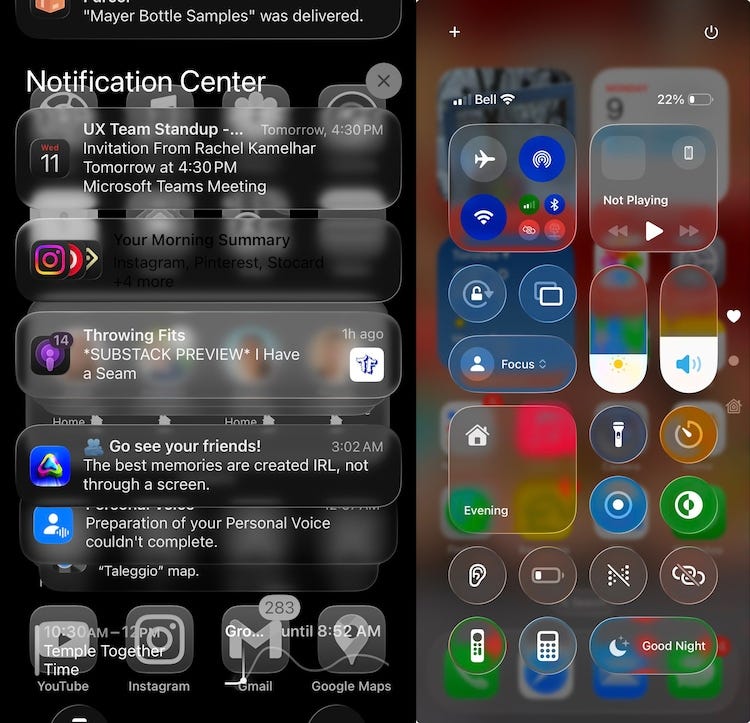
The problem comes when you try to put this glass-like aesthetic on hardware that doesn’t have to overlay the real world, like phones or laptops. Here it’s a borderline nightmare that negatively impacts how you use the device:
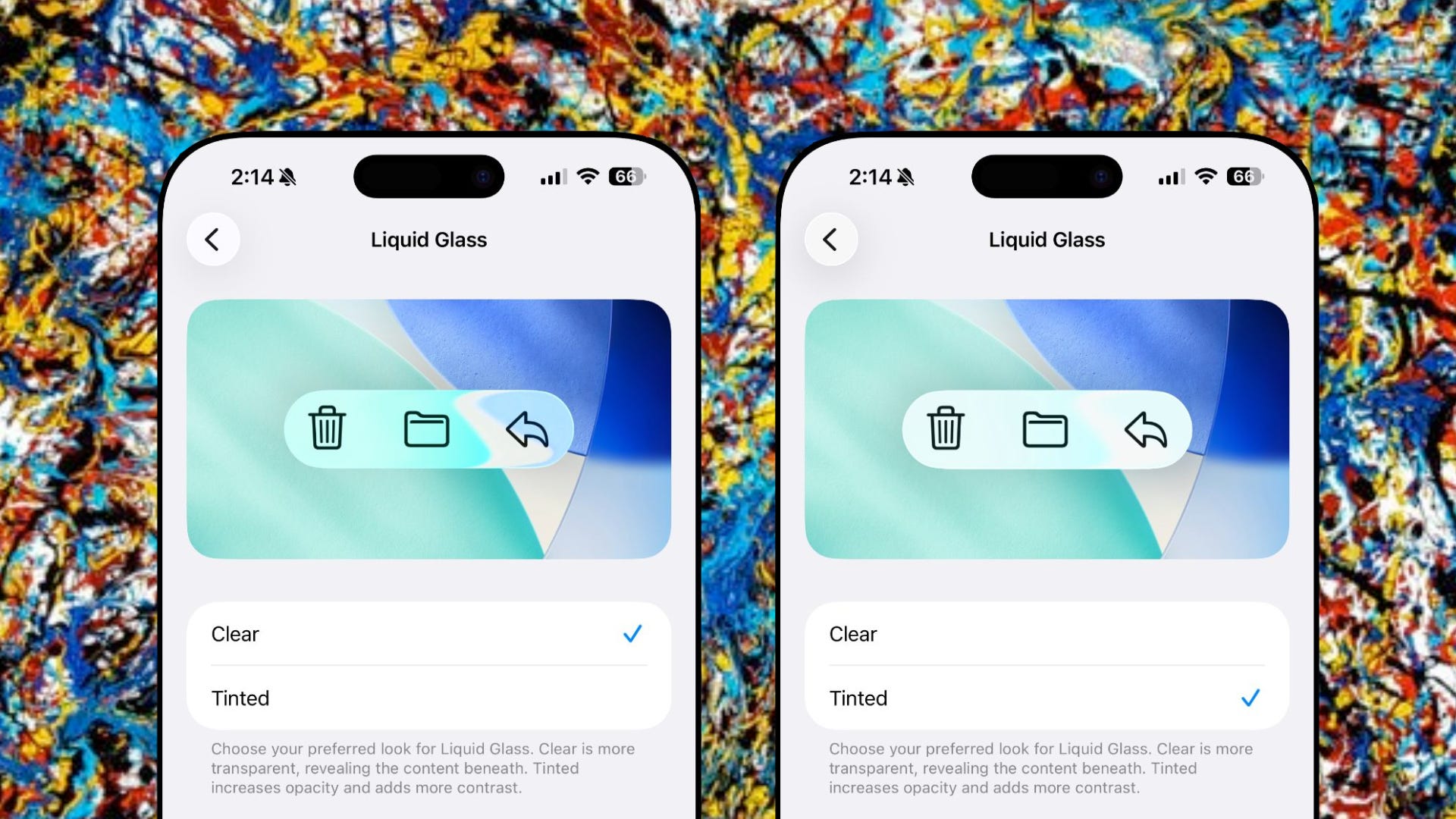
To be fair to Apple, the company recognised this and launched a setting allowing users to alter how see-through the Liquid Glass effect is.
Sidenote: Want to make use of this? Here’s a quick guide:
Go to Settings
Click on Display & Brightness
Select Liquid Glass
Change the setting from Clear to Tinted
Sadly, there’s not a way to turn Liquid Class off, but this frosted approach is an improvement.
So what’s the story here? Apple realises a mistake and changes? Not really. It’s what’s behind the immediate that’s important, specifically where Apple is willing to adapt and, pressingly, where it isn’t.
Seemingly, Apple altered Liquid Glass on iOS, macOS, and iPadOS for accessibility and legibility reasons, but what’s particularly fascinating is how many other issues were ignored.
If you look online, there are swathes of people commenting on an array of bugs across the OS, from lagging and dropped frames to keyboard issues and battery drain.
This gets to the core of what’s going on: Apple is increasingly not Apple.
One of the company’s foundations is not being first to the party, but the best. It’s what the iPod, iPhone, and iPad were all about. They weren’t the original MP3 players, smartphones, or tablets, but they were the slickest and most well-rounded on the market.
Historically, the reason to pick up a MacBook is it just works better than other laptops. Liquid Glass marks a clear shift in this perception.
Sidenote: One of the key reasons Apple devices work “better” is because of the close connection between hardware and software. By strictly controlling the number of devices in circulation and the components they use, Apple can make operating systems and apps that complement one another. Compare this to Windows or Android that have to operate on a wide array of hardware.
This is why Liquid Glass stands out in Apple’s story. It’s buggy and unintuitive for no real reason. The only reason I can see it existing is… just because?
Yes, you can make an argument that the goal of Apple’s OS26 range is to unite design across different devices, but while that is an explanation, it’s not a particularly good one.
I can’t even say it’s enshittification. Apple’s not making more money out of Liquid Glass. It’s not serving greater number of adverts or grabbing cash from the OS. Nor will unveiling a new design lure punters. I doubt very much anyone will see this new UI and suddenly switch from Android on the strength of that.
Instead, this smells of internal politics.
Someone inside of Apple wants both change and yearly updates. It’s a contradiction. There’s nothing wrong with a redesign, but what is wrong is half-assing it to a self-imposed deadline. If Liquid Glass came out properly tested, broadly bug free, and aesthetically usable, it wouldn’t be an issue.
Rather than this, the opposite has happened. We’ve been served a steaming pile of half-baked shit. Just because. There’s no other reason than that.
Liquid Glass isn’t very Apple. Or maybe it actually is. Liquid Glass is modern Apple: poorly thought out and antagonistic to users.